AgroSRM
Modular B2B platform for supplier management, warehouse inventory tracking, lab analysis, and procurement automation
( KEY CHALLENGES )
( DESIGN PROCESS )
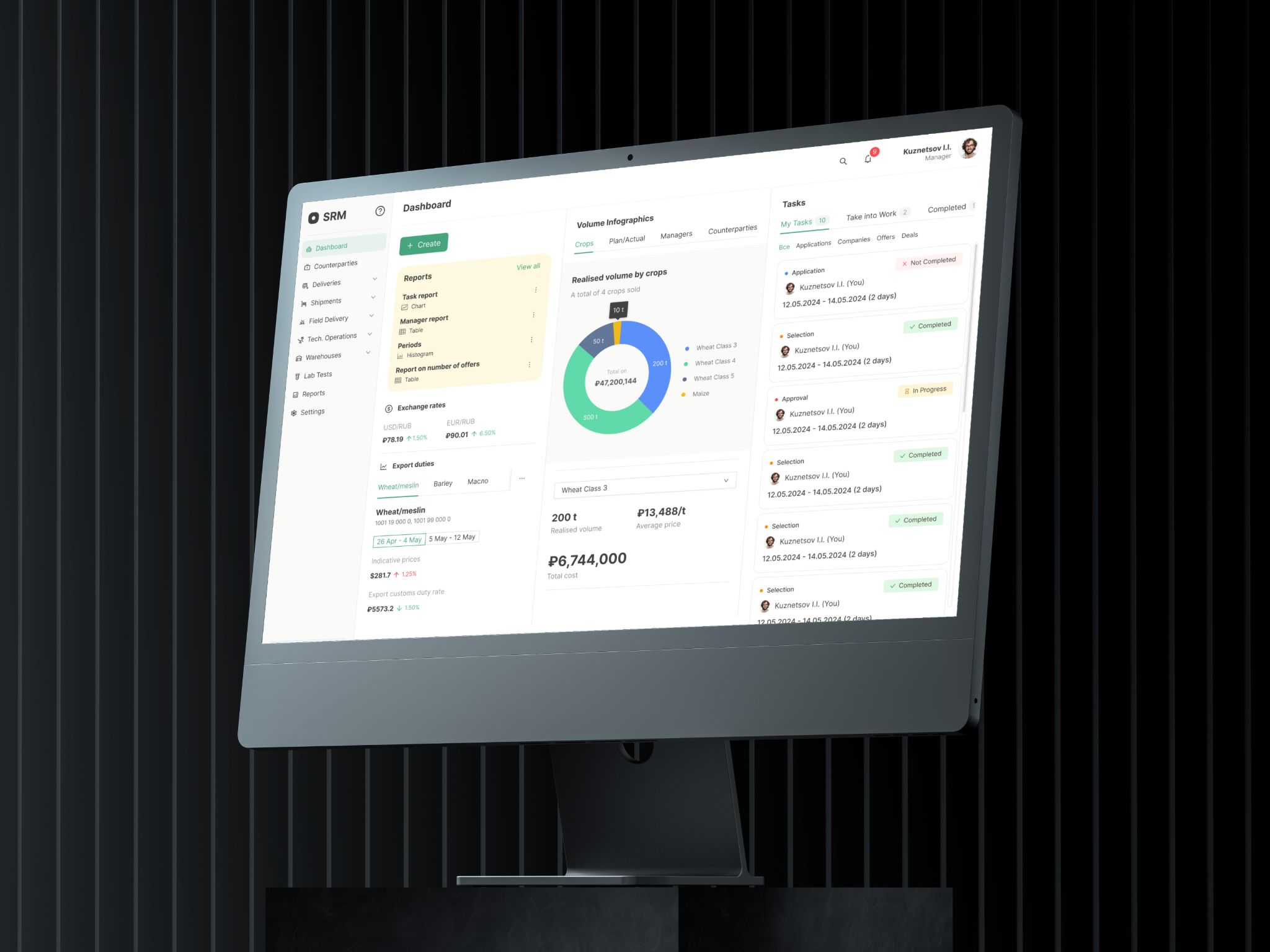
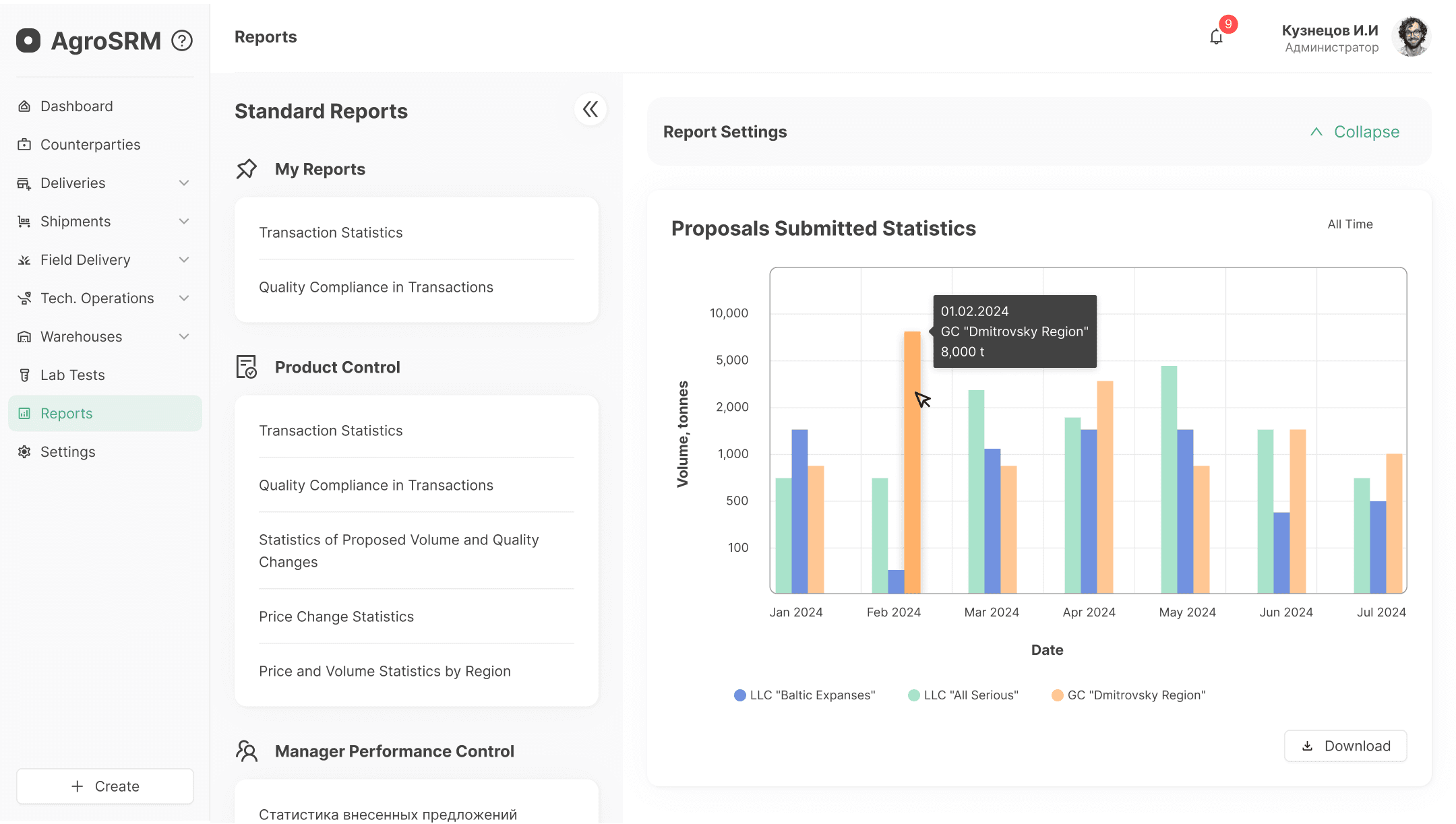
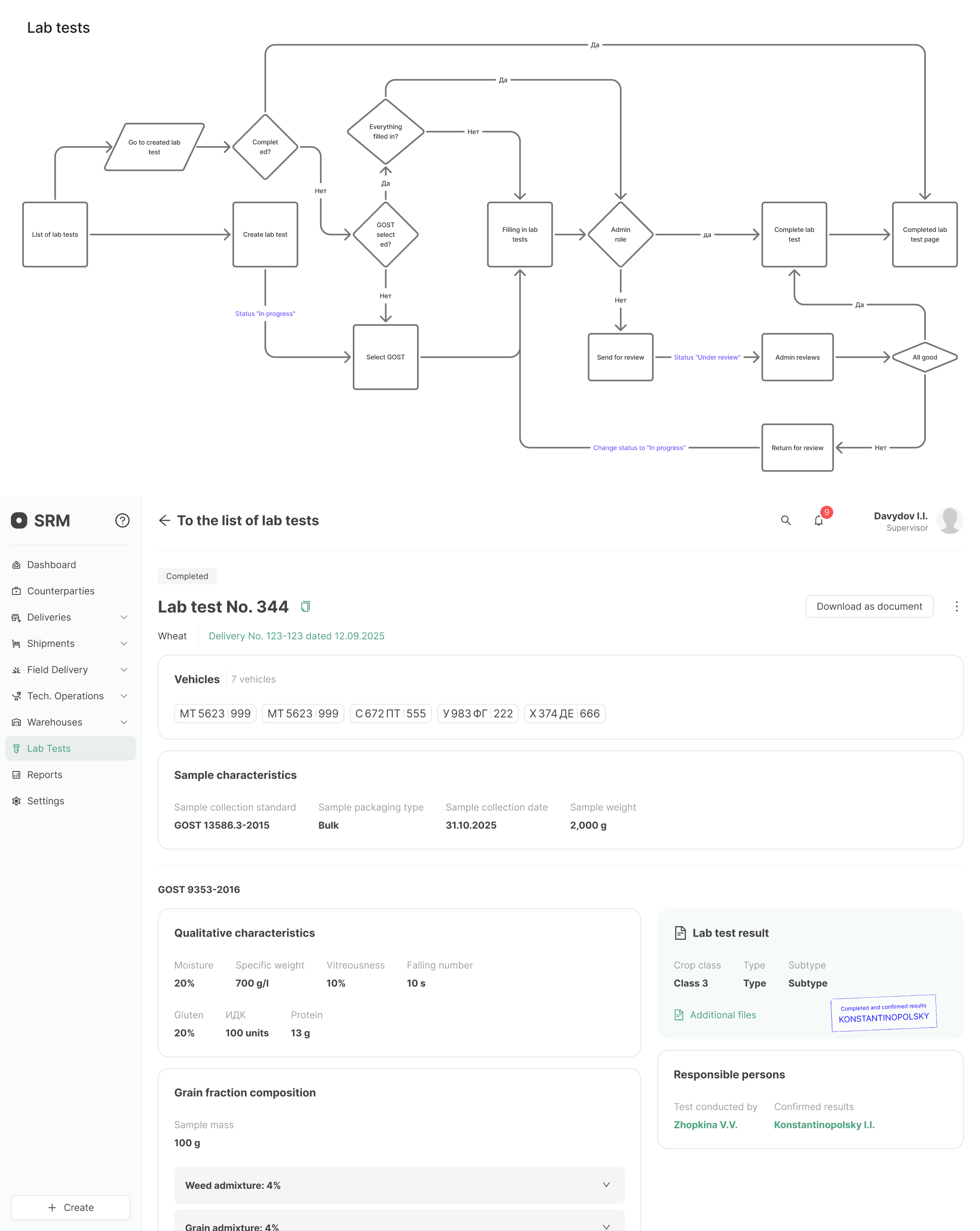
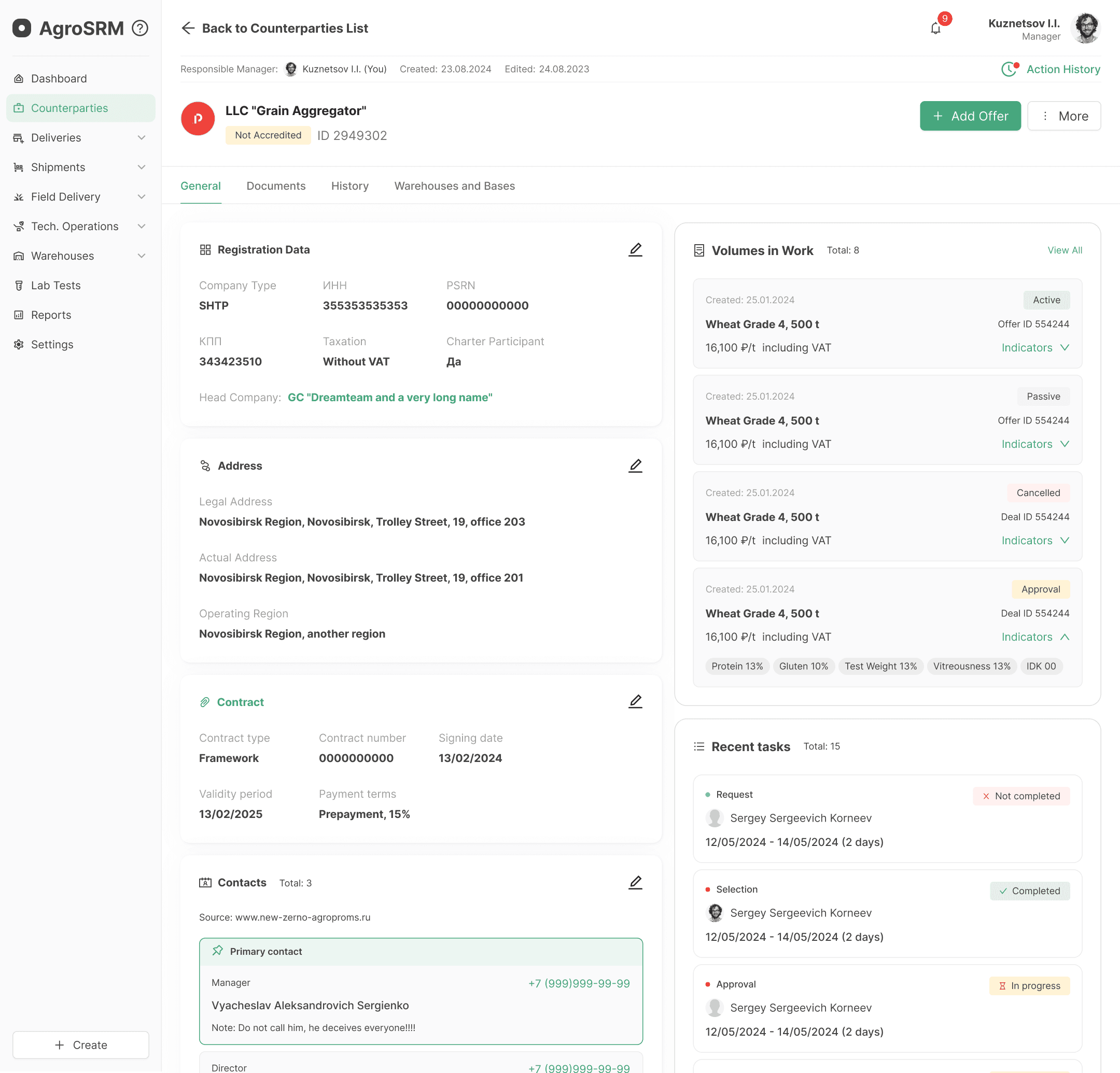
The core challenge was modularity. Different enterprises have different needs, so I designed a flexible structure where entire modules could be toggled on or off without breaking the system's logic. Several rounds of feedback with domain experts shaped the details. One unexpected insight: lab technicians must not know which supplier a vehicle belongs to — to prevent bias and fraud. That became the foundation for the vehicle-only view mode. Wrapped up with a full design system and documentation to give the dev team a clean foundation for the MVP launch.
( RESULT )
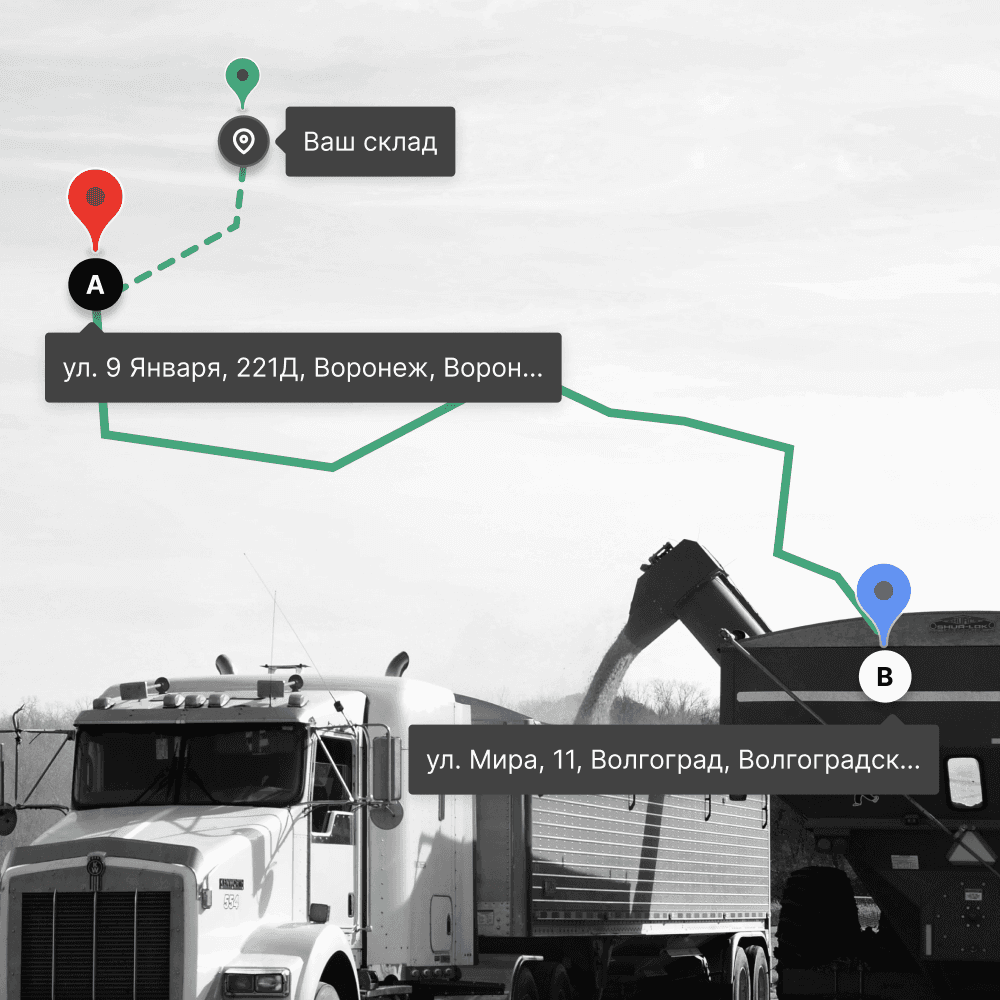
Deliveries and shipments can be tracked two ways: by Specification (contract-based batches) or by Vehicle — for roles like weighers or lab technicians who only need to see what's in front of them. Lab tests follow the same logic — strictly tied to a single operation, with built-in validation that keeps quality data clean and audit-ready. Warehouse management is built around a simple hierarchy — Warehouse → Sector — with a full history of every movement, drying cycle, and cleaning operation. For weighmasters, there's a separate stripped-down interface that connects directly to industrial scales, cutting out manual input where errors are most costly. And because every enterprise is different, admins can fine-tune exactly what each role sees and does. A lab technician gets lab access. A manager gets the full picture. Nothing more, nothing less.
( LATEST PROJECT )